
What do we mean by existence? I’d like to go out on a limb and say: Everything we’re aware of and (arguably) what we aren’t aware of; whatever we can plausibly perceive, think about, or talk about in the world. Our imagination exists, but what we imagine, as we tend to believe, does not.
Certain things are inherently difficult for us to conceive – even some otherwise ordinary things. Imagine you have a house plant that’s thriving. You leave for a month and return to find it (no surprise) dead. Mere dry stalks. You know what happened: it died for lack of water. You also have some idea how that process transpired. Gradually, in stages, to a point where water would not have revived the plant. All this is retrospective in your mind, whether or not you care about the dead plant. (We won’t talk about pets; it might be too upsetting).
But I would argue that there’s a sense in which we cannot imagine what happened, precisely because it wasn’t witnessed. The actual dropping of one particular leaf, for example: you might have been aware of that leaf before you left, but it dropped without any human perceiving it. Had you left a camera to record it, that would simply have been an extension of the human eye, allowing us to perceive it remotely or later on. The actual existence of the plant in our absence (although necessary to posit) is hard to picture, because any such picture is in some sense imaginary, a projection of our senses.
It’s the same if you imagine a lonely beach on some far Australian coastline, say, five million years ago. We know from abundant evidence that waves broke on that beach and that pebbles crunched under those waves. But no one heard or saw it happen. There’s no perspective from which to say, “that’s how it looked; that’s what it sounded like.” We can almost say it didn’t exist; or more precisely, it existed in a way that we don’t experience existence via the human senses.
What I’m getting at is that existence – even what we can only see in our mind’s eye, by constructing pictures and projecting them on what we’ve never seen – all gets filtered through human consciousness. It doesn’t in any meaningful sense exist apart from our consciousness of it. Thus, existence isn’t just predicated on consciousness; I think we could say that existence is consciousness. Even if we apply existence to things prior to human consciousness.
For example, when we say that the universe is 13.4 billion years old, and the earth is some 3-4 billion years old, we know that those statements are scientific truths: that things “happened” prior to human life (or to any life on earth) in a sense that makes sense to us. We construct our understandings of what we can experience directly (or what scientists can experience with their tools) around these assumptions. We can tell evidence-based, scientific stories about them. But there’s a sense in which what we’re talking about is not just past but imaginary. No one was around to observe the Big Bang, so it couldn’t have “looked” or “felt” or “sounded” like anything – at least not without a mediating mental act of projection or hypothesis.
This isn’t just about the proverbial “tree falling in a forest,” although that’s part of it. We’re extending that idea not just over space but over time. And because it’s about thought, it’s inevitably also about language, and whether the word “existence” is adequate to our needs: whether it should be subdivided, contracted, or expanded, in order to maximize our capacity to communicate within the thin, fragile web of language. Language is a marketplace of meaning, full of negotiation and compromise and the occasional swindle.
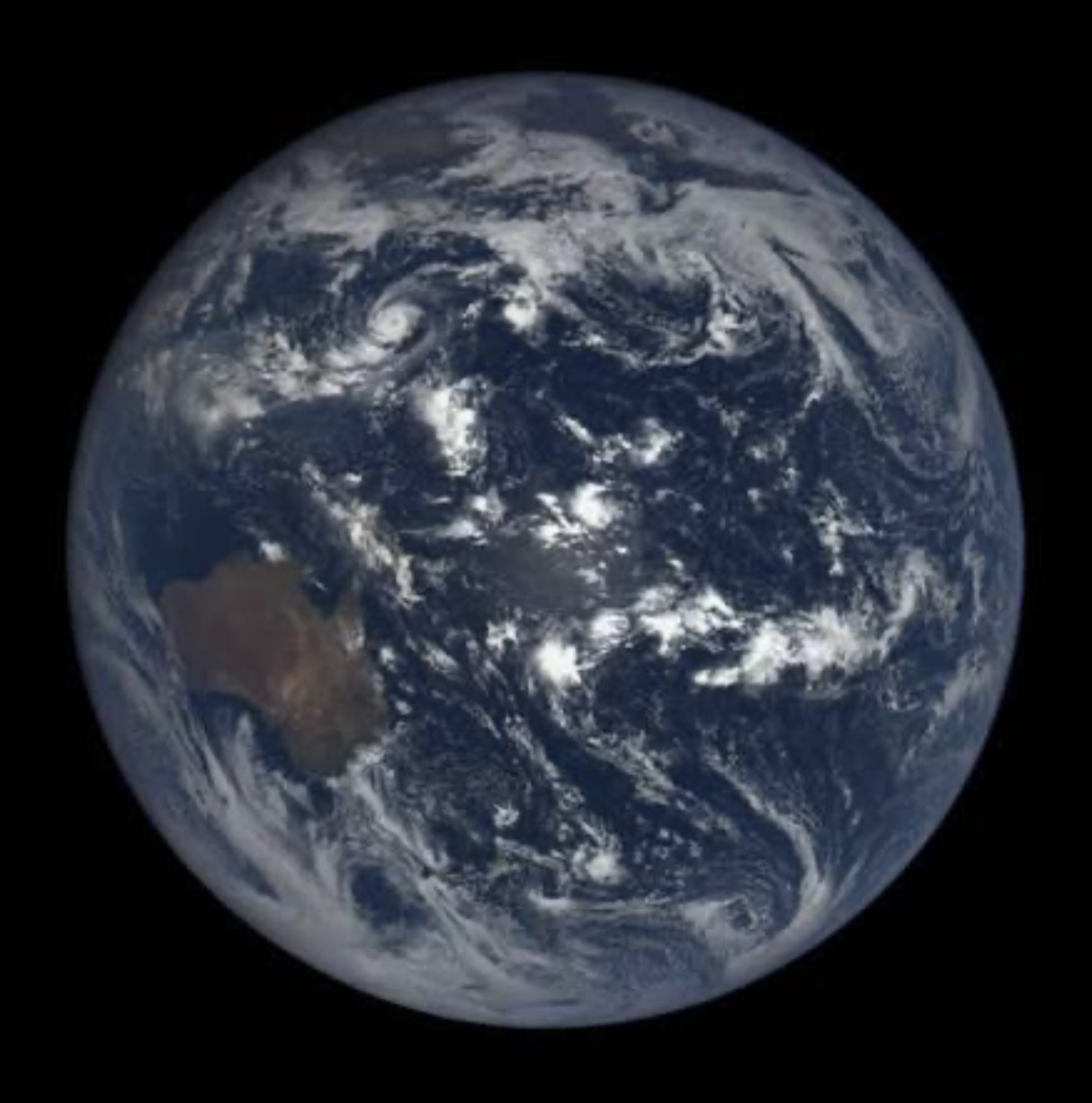
Suppose now that life on earth were to end, and the planet continued to orbit the sun without us. The universe bus would presumably continue down the road without a driver or passengers. We can imagine this scenario, can picture it in our minds. It’s a lonely thought. But we can’t perceive it directly; and if it were to come to pass there would, by definition, be no one left to perceive it.
My question is whether, in that scenario, it would still be meaningful to say that the universe would continue to “exist.” Exist for whom, or for what? Things may “exist” without us, as they “existed” before life began, but we invented the concept of existence.
We might predict or imagine what it would be “like,” or how long it would take for our skyscrapers to fall in the absence of human life; but it’s just as meaningful to say that it doesn’t or can’t exist, because if it exists outside of human consciousness, it only exists in a thin and tenuous sense of the word. It exists as a scientific idea, surely; but positing that existence adds nothing to our knowledge.
I’m not making a scientific claim here, but a metaphysical one about the nature of reality. Science is how our minds grasp the natural world; metaphysics, and philosophy in general, are more about how mind and nature interact, and how we can map that interaction.
In that sense, I believe, all metaphysical claims or principles relating to the interaction of mind and nature are, and must be, essentially pragmatic. They must be useful to us, must guide our further thinking; there is nothing else for them to do. The same can be said for the claim that anything exists. Either it helps to assume its existence, and non-existence gets us nowhere, or the opposite is the case. In this sense, too, existence is a pragmatic assumption.
For me, however, positing existence doesn’t settle the question of why there is something rather than nothing. The why question, I’m guessing, is a broader one that must have either a causal explanation that we cannot access (in which case, does that explanation exist?) or a spiritual one to which some of us are privy and others are not. But given that the universe manifestly does exist, and assuming for the sake of argument that there’s only one universe, it becomes hard to imagine it not existing. (For further reading, see Jim Holt’s Why Does the World Exist: An Existential Detective Story (2013)). Similarly, consciousness being what it is, and something granted in various degrees to all humans, it’s hard to imagine a supreme being or force that could explain existence without any causality.
These metaphysical claims aren’t based on science, but on their own utility in grasping the world as a whole – in grasping existence, in other words. They are not imposed upon us by the universe; rather, they are concepts we devise to make sense of things. Even such basic concepts as causality, which undergirds science and everyday life, are human inventions that make sense of the world. Try living and speaking without it: without causality, there’s chaos. Without it there can’t be time or agency or consciousness – and we have consciousness.
So, yes, waves broke on beaches millions of years before we were here; scientists are right to insist on that. But with no one around to perceive those waves, or the clouds in the sky or the oceans, in what sense did they “exist”? And in what sense will “existence” survive us? You tell me. See you in the marketplace.