
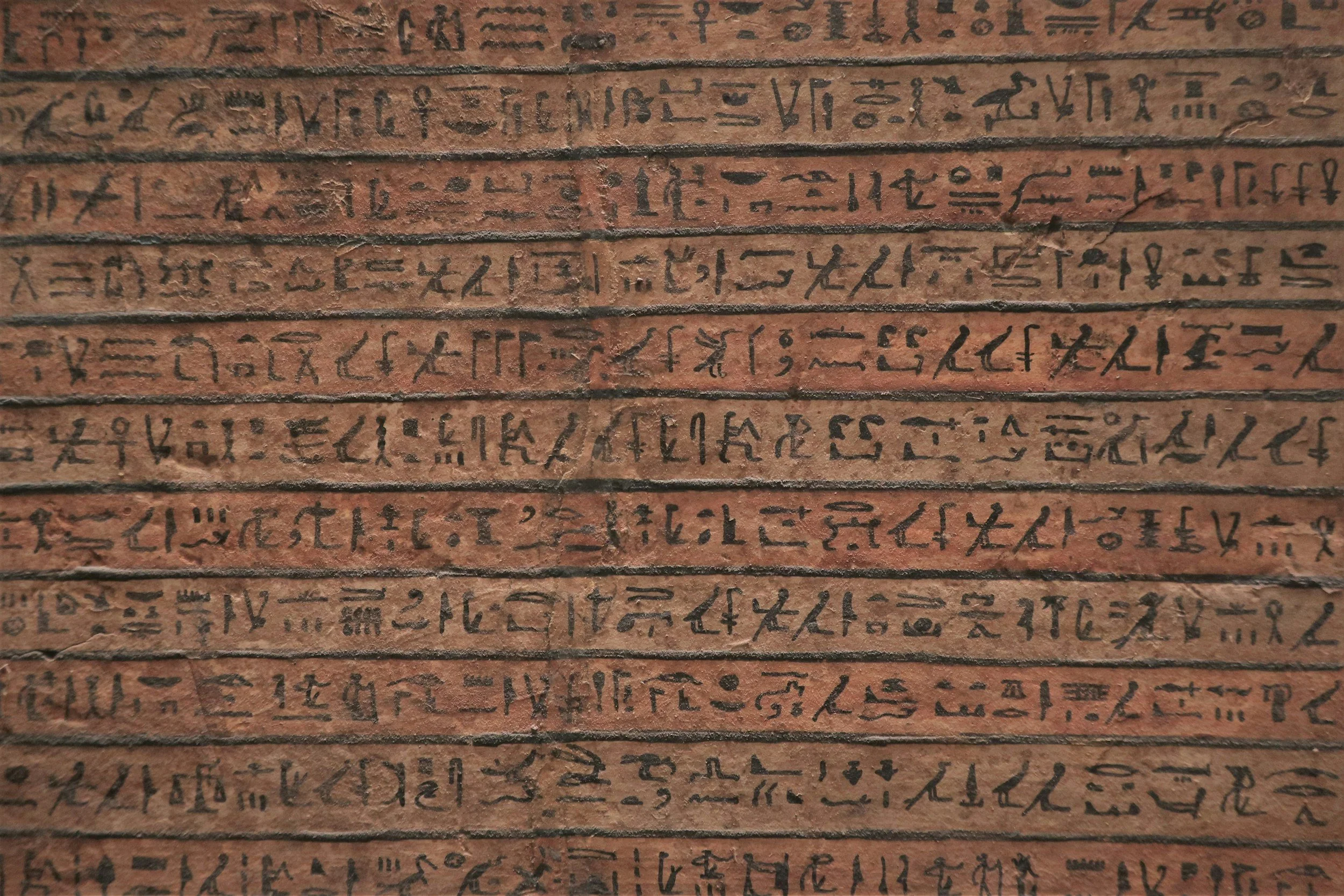
The history of the liberal arts, or as I prefer to call it, critical inquiry, is largely the history of books and writing and creative expression. But more than that, it’s the history of the nexus of knowledge and imagination itself, as a civilizational value: of how they are created, stored, and used (or abused). It is a history of curiosity, of openness to the wider world beyond one’s own community or culture. Openness, in other words, to moral and intellectual growth as a human being.
That is the history that the Spanish classics scholar Irene Vallejo covers – to the extent it can be covered in a single volume – in her recent book Papyrus: The Invention of Books in the Ancient World (2022, translated by Charlotte Whittle). I can’t say I was surprised that I enjoyed it – a lot. History interests me, although philosophy and literature have been among my main preoccupations. Ancient history isn’t my strong suit, but not because I find it uninteresting or unimportant.
In case you’re wondering, I studied Ancient (Western) history in 9th grade, when I didn’t know what studying meant, and couldn’t make the connection between reading, paying attention in class, and acquiring knowledge. (My teacher was an exceptionally nasty woman, which didn’t help.) Two years later, I studied “Non-Western History” as it was called, with a very nice teacher, and enjoyed it. But look at me, I’m digressing back to my schooldays just like Irene Vallejo does once every few pages. I’ll just add that in my senior year of high school I took a minor elective in Ancient Greek. I hadn’t learned yet how to learn – that would come the following year in college – but I can still recall most of the Greek alphabet.
In another life, I would study Greek, read Plato and Aristotle in the original, and be my own version of, say, Adam Nicolson or Irene Vallejo. Part of me regrets not following that path, the way of Hellenism. It is the original spring of reason, the headwaters of Western Civilization.
To be sure, Western Civilization only covers a small part of the history of the world, civilized or otherwise. And Irene Vallejo doesn’t stray beyond the Mediterranean to Africa, India, China, or elsewhere in tracing the evolution of writing and books. The story of writing begins in Mesopotamia with the Phoenician alphabet, which was the basis for the Greek. It evolved from writing on clay tablets, most likely at first to record business accounts, to parchment, velum, and papyrus scrolls, and eventually to bound and ultimately to printed books. But Vallejo, as the saying goes, covers the waterfront – and it’s a vast waterfront, embracing the entire Mediterranean basin and a period of more than a thousand years.
And she covers much else besides that waterfront (and besides her schooldays). The primary focus is on the Greek city of Alexandria, in Egypt, where one of the world’s first great libraries was founded, and eventually destroyed. But this sprawling tome will vex some readers because it abounds (and that’s an understatement) with digressions, anecdotes, and swatches of autobiography. Those excurses could, and probably should, have been made into a second book. But I wasn’t vexed. It’s all interesting, even the personal stuff, and it’s all (sort of) related.
The second part of Papyrus is called “The Road to Rome,” and deals with that complex, bloodthirsty, but (while it lasted) enormously successful Roman Empire. empire. “The Romans recognized Greek superiority without losing any sleep over it,” Vallejo writes. They were wise enough to adapt it as their own. This was an extraordinarily lucky circumstance, which brought Greek art, knowledge, and rationality forward in time and space into Western Europe. “Imagine,” she writes, “the British striving to hold their literary soirées in Bloomsbury in Sanskrit, or Proust sweating to strike up a refined conversation in Bantu with the Parisian aristocrats who so fascinated him.” For all their pillaging, the Romans knew a good thing.
What I liked most about Papyrus wasn’t just what I learned, though I’m sure some of it will stick because, well, I’m not in 9th grade anymore. I also liked the author’s freedom to swerve in and out of scholarly discourse, and her passion for learning and knowledge as the very antithesis of tyranny and violence. I liked Irene Vallejo’s curiosity about things that are good or necessary or awful or important in human history, things that are carried forward as institutional memory and art and ideas and tools, and these are what we call civilization. That intellectual energy transcends the subject of Greece and Rome, and becomes a mirror held up to the reader’s own urge to know, reminding us that, from the neck up, we are still alive.